
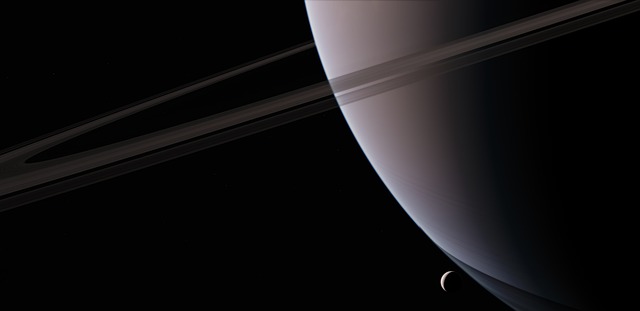

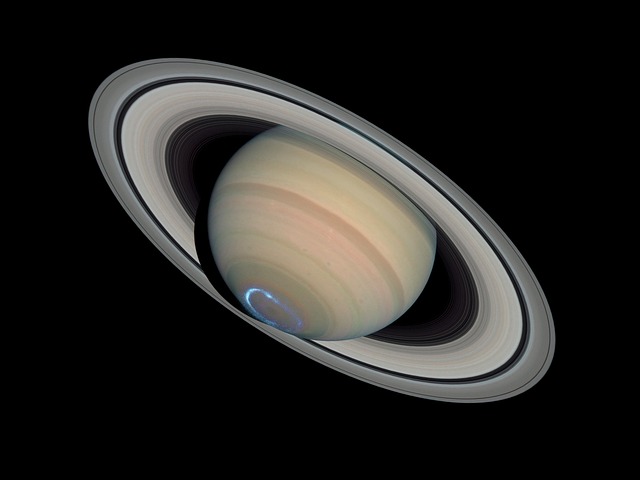
The European Space Agency (ESA) is preparing an ambitious mission to investigate whether life could exist beyond Earth, with plans focused on Enceladus, one of Saturn’s icy moons believed to conceal a vast ocean beneath its frozen surface. Scientists have long been intrigued by Enceladus, which harbours a warm, salty ocean beneath a thick ice shell. The moon has been considered a prime candidate in the search for extraterrestrial life since NASA’s Cassini spacecraft detected towering plumes of water vapour and ice erupting from its surface during fly-bys in 2005.
++ Britain’s tallest waterfall outscales Niagara in a location few ever reach
Those geyser-like jets, rising from fractures in the moon’s crust, are thought to originate directly from the subsurface ocean. Analysis of Cassini data revealed the presence of salts, organic compounds and elements essential for life, offering rare insight into an otherwise hidden environment. More recent studies suggest the plumes also contain complex organic molecules, indicating active chemical processes deep below the ice.
ESA’s proposed mission, pencilled in for launch in 2042 or 2043, would see a spacecraft make a controlled landing on Enceladus. Rather than drilling through the ice, the probe would collect and analyse fresh material falling back to the surface from the plumes, allowing scientists to sample ocean water without breaching the crust.
Dr Joern Helbert, head of ESA’s Solar System Science Directorate, said Enceladus stands out as an exceptional target. “Here, ocean material is naturally expelled into space, which means we can sample it directly,” he said. “You have heat, liquid water and organic chemistry — all the key ingredients that could allow life to emerge. There is broad agreement within the scientific community that Enceladus may be habitable.”
The mission’s primary goal will be to search for biosignatures — chemical patterns or structures that are strongly associated with living processes. One key focus will be chirality, a property of molecules that exist in left- or right-handed forms. On Earth, biological systems show a strong preference for one orientation, a trait that could signal life if detected elsewhere.
Researchers will also examine whether potential biosignatures appear clustered in specific regions, rather than being evenly spread. Such grouping could indicate biological activity concentrated in favourable environments. While the team has not entirely ruled out the possibility of finding intact microorganisms, they stress the mission is designed to detect chemical evidence rather than living creatures themselves.
If life exists on Enceladus, scientists believe it may resemble extremophiles found on Earth around deep-sea hydrothermal vents, known as black smokers. These ecosystems thrive without sunlight, relying instead on chemical energy, and are rich in diverse organisms. Similar conditions could exist on Enceladus’s ocean floor. The journey to Saturn will take around eight years. Once there, the spacecraft will use fly-bys of Titan, Saturn’s largest moon, to adjust its trajectory before entering orbit around Enceladus in the mid-2050s. Before landing, the mission will spend several weeks mapping the moon’s south polar region, where the ice is thinnest, to identify a safe touchdown site.
++ Couple divorces just weeks after wedding due to feuding pets
Enceladus remains poorly mapped, and scientists do not yet know whether its surface is solid ice or softer, snow-like material. Careful reconnaissance will therefore be essential to avoid hazards. Should the mission uncover compelling signs of life, it could pave the way for future expeditions aimed at penetrating the ice and exploring the ocean directly. NASA is already developing concepts involving swarms of miniature robotic swimmers, delivered through a nuclear-powered thermal drill capable of melting through kilometres of ice.
The implications of such a discovery would be profound. Until now, the search for life has focused largely on rocky planets within the so-called Goldilocks Zone, where temperatures allow liquid water to exist on the surface. Evidence of life on Enceladus would dramatically expand that definition. “It would fundamentally change how we think about habitable environments,” Dr Helbert said.
The mission received funding approval from European science ministers at an ESA conference in November. ESA Director General Dr Josef Aschbacher described the prospect as transformative. “We know from Earth that life can exist in darkness, without oxygen and without sunlight,” he said. “The possibility of finding traces of life elsewhere in our Solar System is extraordinary — and Enceladus is one of the most exciting places to look.”


 is preparing an ambitious mission to investigate whether life could exist beyond Earth...)