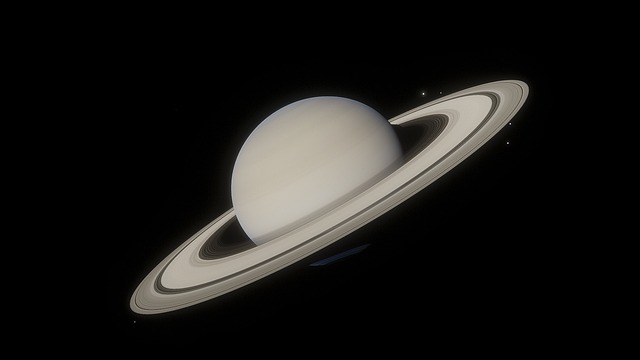
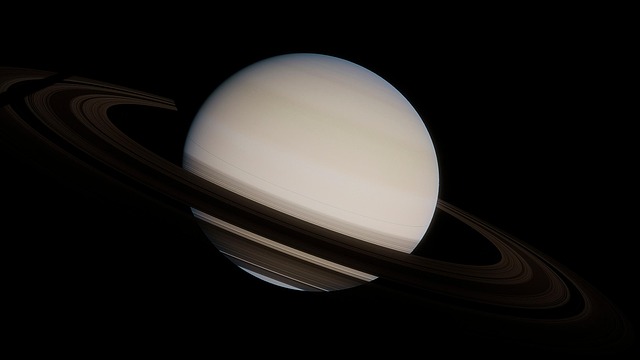
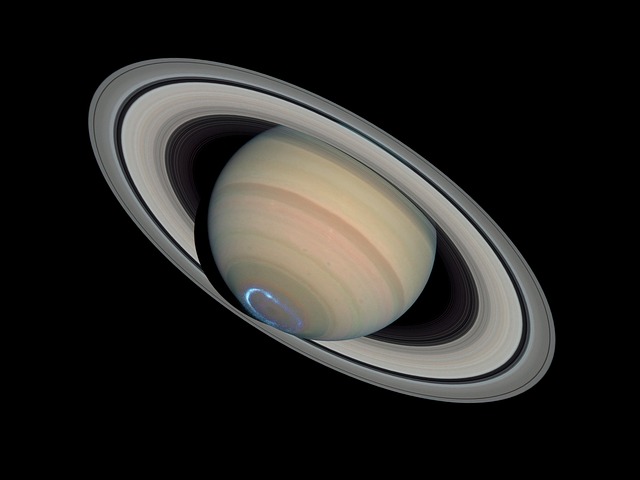
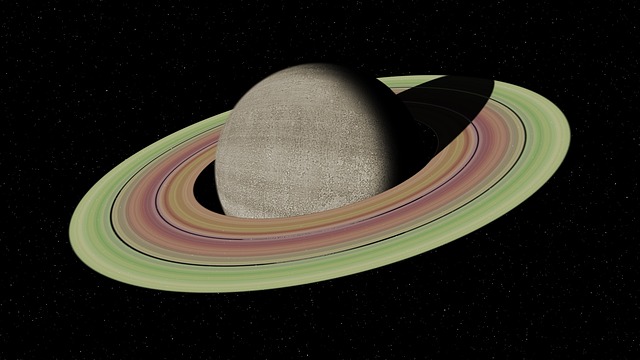
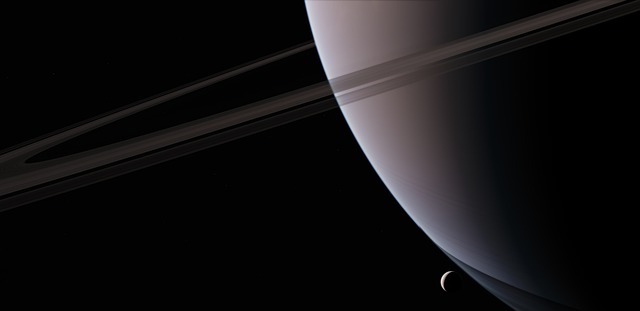
Fresh images of Saturn released by European Space Agency, NASA and the Canadian Space Agency are offering scientists an unprecedented look at the planet’s complex atmosphere. Captured by both the James Webb Space Telescope and the Hubble Space Telescope, the images provide complementary perspectives. By comparing the two, researchers are able to examine Saturn’s atmospheric structure and behaviour in far greater detail than before.
++ Cornwall station to support NASA’s Artemis II moon mission
The Hubble observations were taken in August 2024 as part of the Outer Planet Atmosphere Legacy programme, while the Webb telescope recorded its infrared images several weeks later. Both sets of data rely on sunlight reflected from Saturn’s clouds and hazes, but each instrument reveals different aspects of the planet.
Hubble’s images highlight subtle variations in colour across the gas giant, allowing scientists to track weather patterns such as storms and cloud bands. In contrast, Webb’s infrared capabilities penetrate deeper into the atmosphere, revealing layers of clouds and chemical compositions at varying depths—from dense lower clouds to the more diffuse upper regions.
The Webb images also bring out striking features not easily visible in optical light. Saturn’s rings, for instance, appear exceptionally bright due to their ice content, while the planet’s poles display unusual grey-green tones. Researchers suggest these colour differences may be linked to high-altitude aerosols scattering light, or to charged particles interacting with Saturn’s magnetic field, potentially producing auroral activity.
++ Women head to Turkey for drastic leg-shortening surgery
Scientists believe the combined observations will become increasingly valuable over time. The images, taken 14 weeks apart, capture Saturn as it transitions from northern summer towards its next equinox in 2025. As the planet moves into southern spring and eventually summer in the coming decade, both telescopes are expected to provide even clearer views of its changing atmosphere. Together, the findings underscore the importance of multi-wavelength observations in deepening our understanding of planetary systems beyond Earth.


