



Scientists at Vienna University of Technology have developed an extraordinarily small QR code, smaller than most bacteria, in what could mark a significant advance in data storage technology.
++ Mystery illness in orbit leaves NASA doctors searching for answers
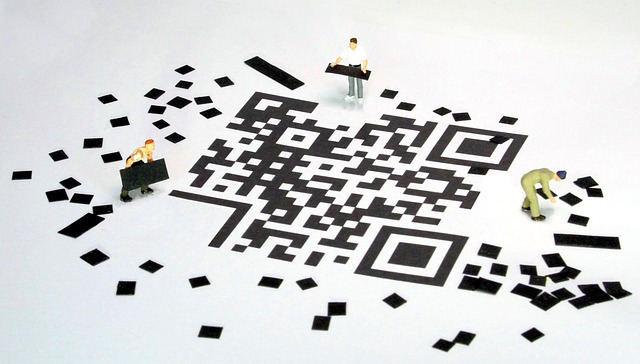
The research team used beams of charged particles to engrave a fully functional QR code onto a specialised ceramic surface. Measuring just 1.98 square micrometres, the design has been recognised by Guinness World Records as the smallest of its kind. Due to its minute scale, the code cannot be seen with conventional optical microscopes and is only visible under an electron microscope. Despite this, researchers say the code remains stable and can be reliably scanned when viewed with the appropriate equipment.
Professor Paul Mayrhofer, from the university’s Institute of Materials Science and Technology, said the achievement lies not only in its size but in its durability. The ceramic material used — similar to coatings applied to high-performance cutting tools — allows the structure to withstand extreme conditions without degrading.
Unlike traditional digital storage methods, which rely on magnetic or electronic systems that can deteriorate over time, the ceramic-based approach offers the potential for data to be preserved for centuries without the need for power or maintenance.
Dr Alexander Kirnbauer, a senior researcher involved in the project, noted that modern society depends on storage systems that are comparatively short-lived. He said the team’s approach draws inspiration from ancient civilisations, whose inscriptions have endured for millennia. The implications could be considerable. Researchers estimate that, if the technology is scaled up, more than two terabytes of data could be stored within an area the size of a single sheet of A4 paper.
++ Rare footage captures sperm whale birth and remarkable pod cooperation
The team is now exploring ways to refine the technique further, including increasing writing speeds and adapting the process for industrial use. Future research will also examine how more complex data structures, beyond simple QR codes, might be embedded into ceramic materials efficiently and reliably. While still in its early stages, the development points to a possible future in which vast amounts of information could be preserved in highly durable, microscopic formats.


